Fewer Deaths, Or Less People At Risk?
by Sarah Auger, Petra Schulz and Angela Welz

March 4, 2026
TL;DR
Drug poisoning deaths have been declining across North America in the past two years. The authors examine the evidence for the underlying reasons and their response to the findings.
Lower death rates are attributed to three main drivers:
The drugs - detection of lower fentanyl concentration
The user - more people are smoking rather than injecting and fewer use fentanyl
A declining at risk population - fewer young people use substances and many of those at risk have died
While politicians claim victory, these reasons can not be attributed to individual government decisions, as the trend spans across regions with vastly different policies.
Government approaches to the crisis are one of organized abandonment, when those in power deliberately withdraw support from certain communities, leaving them vulnerable to harm, poverty and death. This is especially evident for indigenous people who experience disproportionate death rates.
To save lives, harm reduction and treatment must work together within a robust, voluntary, and evidence-based system that prioritizes human rights, personal autonomy, and trauma-informed care.
=======
Since last November research studies and one report have examined the reasons behind declining drug poisoning deaths across Canada and the USA. While the declining numbers are good news, the reasons for this trend are both painful and eye-opening to those of us who have lost loved ones. Sarah, Petra and Angela explore what they have learned and the emotions this evokes
Everyone involved in drug policy, including people who use drugs and their families, breathed a sigh of relief when drug poisoning (overdose) death numbers started to significantly decline in 2024. Politicians congratulated themselves and credited the decline to whatever policy they had implemented.
In Alberta the governing United Conservative Party attributes the lower numbers to their investment in the private recovery industry in what they call a “recovery oriented system of care”.
BC’s governing NDP likewise is focused on their investment in treatment, while ending decriminalization and curtailing the provision of safe regulated alternatives to toxic street drugs, referred to as safe supply, ignoring the evidence of the success to these measures.
Ontario wages its own war on harm reduction with the closure of consumption services, while ignoring the evidence showing their benefit to individuals and communities.
What these governments have in common is the firm belief that only their approach has been effective in reducing numbers. That belief often ignores independent research findings and the reality that the trend is the same across regions regardless of which party is in power. Even when numbers decline, they remain devastatingly high. Behind every statistic is a family whose life is changed permanently.
Since 2016, when Canada started to collect numbers more than 53,000 people have died in this country alone.
Sarah’s son Lokotah died in 2022, Angela’s daughter, Zoe, died in 2016. Petra’s son Danny died in 2014, before many of the current tracking systems and policies were even in place. Their deaths, like thousands of others, are not political talking points. They are human losses.
As bereaved mothers, numbers are never abstract. They represent our children and the loved ones of thousands of other families and friends who have been affected by the toxic drug supply crisis.
We know from personal experience and from research that harm reduction, including naloxone distribution, consumption sites and safe supply saves lives. When examining reasons for this most recent decline in deaths three main findings emerge, including one which is deeply upsetting and disturbing.
One: The Drugs - Lower Fentanyl Concentrations
A BC study soon to be published in the International Journal of Drug Policy indicates that samples submitted for drug testing show lower concentrations of fentanyl, the substance most attributed to overdose fatalities. During the COVID-19 pandemic, when borders were closed and supply chains were disrupted, drug toxicity intensified and death rates rose sharply. Over the past two years that trend has changed, with some exceptions. One of those exceptions includes Edmonton, AB where carfentanyl was detected in drug samples. The city recorded the highest number of deaths ever documented in March of 2025.
Two: The User - Changes In Consumption Behavior
A report from the Canadian Public Health Agency, released in December 2025 as well as a US study published in November 2025, show shifts in consumption patterns with more people smoking drugs rather than injecting them. Because smoking results in slower absorption, there are fewer tragic poisonings and a better chance to respond in time. In addition, more users are moving from consuming opioids (fentanyl and analogues) to stimulants (amphetamines), which come with significant, but less deadly challenges.
Three: A Declining Population Means Fewer People Are Left To Die
When we first read about a declining population in the US study and reports by the Canadian Public Health Agency and the US based Drug Policy Alliance, this seemed like good news. Overall, young people today use fewer substances than past generations, and fewer users seem to initiate fentanyl use. However, a closer examination raises another deeply troubling possibility: that so many drug users have already died, as a significant driver for the reduction of the at-risk population. In public health, relating to pandemics, this is called “extinction or total mortality,” if a virus would run its course without effective interventions.
This is indeed what is happening. It has been almost 10 years since B.C. declared the drug poisoning crisis a public health emergency and since the federal government and other provinces started to respond to the crisis. Yet, the fatalities continue, one after another, until there are fewer and fewer people left in harm’s way.
The US prison abolitionist Ruth Wilson Gilmore describes these types of premature deaths as organized abandonment. Organized abandonment means that governments and powerful economic actors intentionally pull money, services, and support away from certain communities, leaving them vulnerable to poverty, harm, and early death.
Organized abandonment is what people who use drugs, their families and communities experience. This is most evident for Indigenous people, who in Alberta are nine times more likely to die from toxic drugs. The policies underlying settler colonialism, aimed to “get rid of the Indian Problem”, continue unabated. Policies that allowed disease to spread, that took away children to residential schools, and during the 60s scoop can be seen today in the continued removal of Indigenous children through the child welfare system (TRC Report, 2015). Our friend Sarah Auger lost her son Lakotah to the toxic drug supply. An Elder who is a member of our Healing Hearts group has lost children, grandchildren and countless other relatives. Indigenous people experience organized abandonment, while politicians and the rest of settler Canada wear orange shirts on National Truth and Reconciliation Day.
We know what works. People at risk of drug poisoning need access to a safe, regulated supply to reduce the dangers of the toxic street market. We need to rebuild and expand harm reduction services, including supervised consumption sites, to keep our loved ones alive and hopeful and connected to care. Harm reduction and treatment go hand in hand and must work together within a robust, voluntary, and evidence-based system that prioritizes human rights, personal autonomy, and trauma-informed care.
While anger churns in our stomachs and grief breaks our hearts, we cannot allow those feelings to paralyze us. We must hold those in power accountable. We need to talk to community groups, to friends, to the media and anyone who will listen - even to politicians who may not want to hear or engage with us.
We will continue sharing the stories of our children and what the lessons of our losses taught us. We do this to honour them, but to also protect others, because we cannot allow more families to be harmed by neglect, indifference and organized abandonment .
===========
Sarah Auger, Petra Schulz and Angela Welz are bereaved mothers and Alberta-based independent advocates for evidence-based drug policy.
Sarah is an Assistant Professor, Faculty Of Education - Aboriginal Teacher Education Program/Indigenous Peoples Education at the University of Alberta.
Petra is a co-founder of the national organization Moms Stop The Harm (MSTH) and,
Angela leads the Edmonton and Alberta Healing Hearts Peer Bereavement Support group and is a past director of Moms Stop The Harm (MSTH).
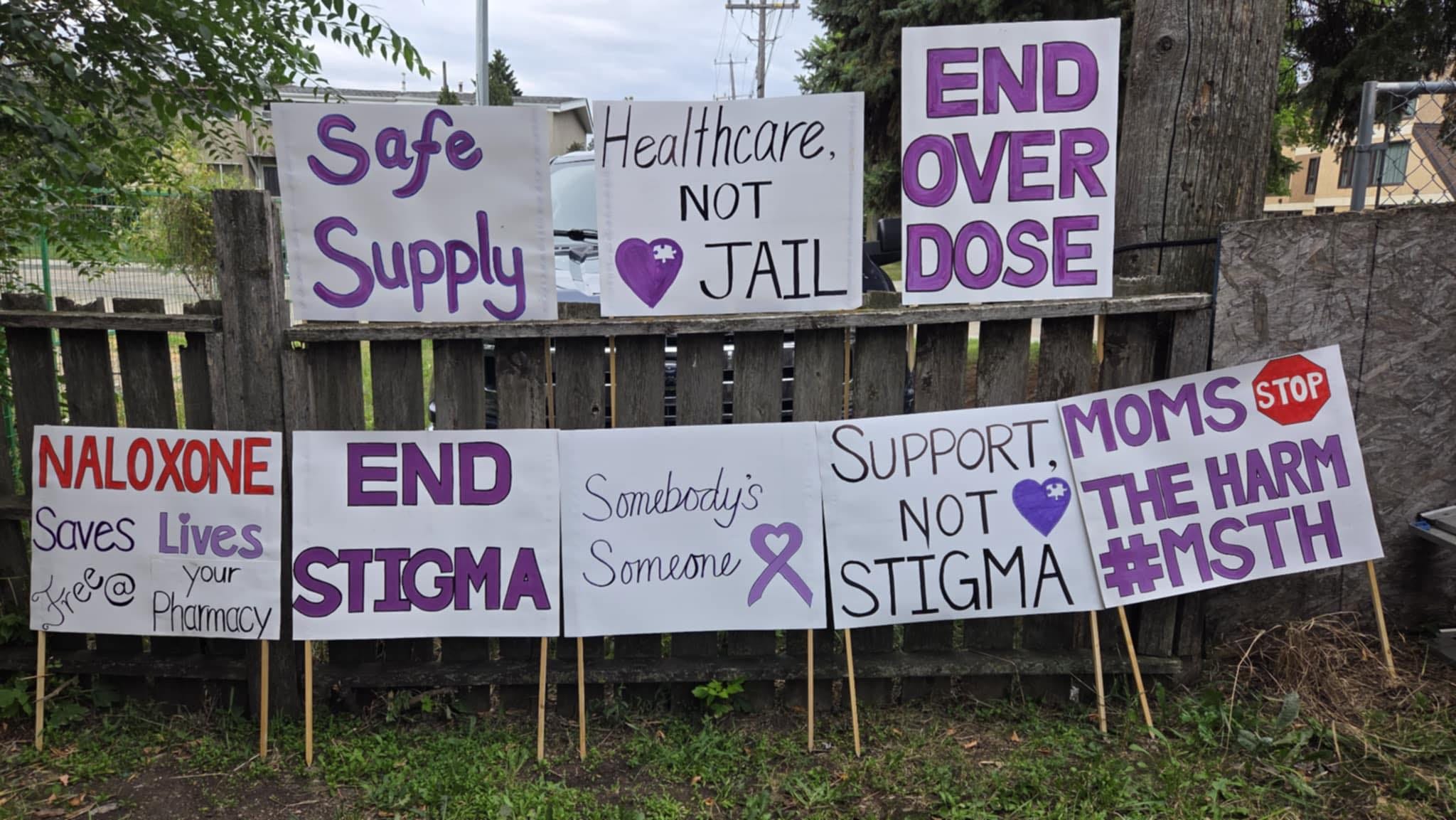
Hearts Alberta is a collective of Alberta advocates committed to compassion, inclusion, and justice. Guided by HEARTS: Harm Reduction, Equity, Advocacy, Respect, Trust, and Support, we stand with people who use substances and who deserve dignity and care.
Thanks for restacking!